Solar lights have become increasingly popular for homeowners seeking energy-efficient lighting solutions. However, many users experience frustration when these lights suddenly stop working. Understanding why do solar lights stop working is vital for effective maintenance and troubleshooting. This article explores common issues that lead to failure and offers practical solutions.
Solar lights rely on sunlight for energy. If the area is shaded or the solar panel is dirty, performance declines. Battery problems are another frequent culprit. Batteries may lose capacity or become damaged over time. Neglecting regular checks could leave you in the dark. Additionally, weather-related damage can affect the durability and functionality of solar lights.
Regular maintenance is essential to maximize the lifespan of solar lights. Simple tasks, such as cleaning the panels and replacing batteries, can make a significant difference. Reflecting on these factors highlights the importance of proactive care. Understanding these aspects equips users to tackle common issues effectively, ensuring reliable outdoor illumination.
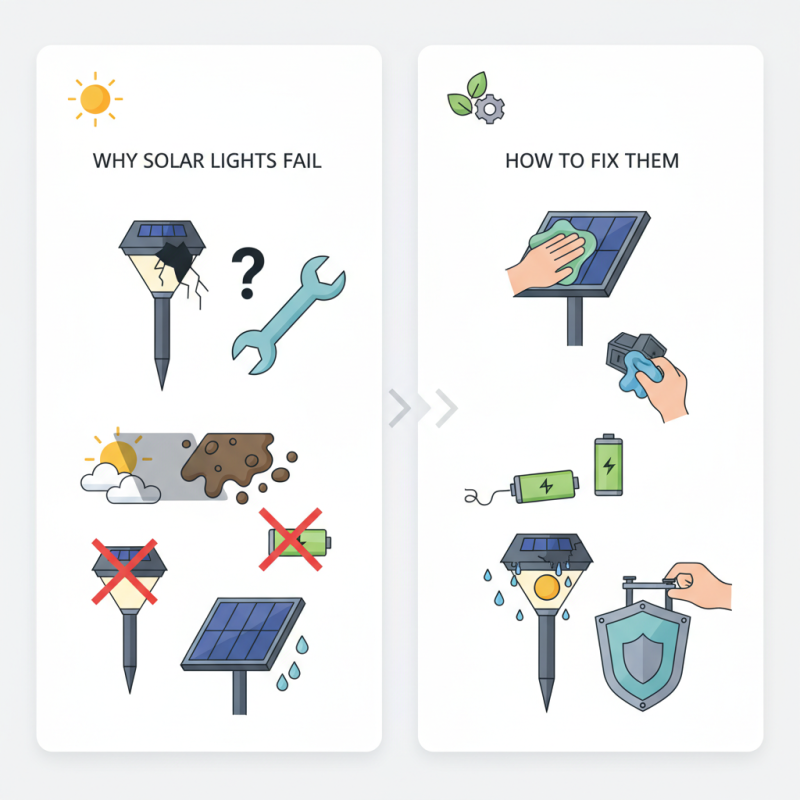
Solar lights can add beauty to any outdoor space, but they often face issues that impair their functionality. Understanding why these lights fail is essential for any user. One common reason is inadequate sunlight exposure. Without enough sunlight, solar panels cannot charge effectively. A dirty solar panel may also block sunlight. Regular cleaning can help maintain efficiency.
Another reason for failure could be battery issues. Many solar lights use rechargeable batteries. Over time, these batteries can lose their ability to hold a charge. Checking the battery's condition and replacing it when necessary can extend the life of your solar lights.
Tips: Position your solar lights in places where they receive ample sunlight. If the area is shaded, consider relocating them. Regular maintenance of both the solar panel and batteries keeps your lights functioning well. Don't ignore signs of malfunction; investigate early to avoid complete system failures.
| Issue | Description | Solution |
|---|---|---|
| Insufficient Sunlight | Solar panels may not be getting enough sunlight due to shade from trees or buildings. | Relocate solar lights to areas with direct sunlight for at least 6-8 hours a day. |
| Battery Issues | Batteries may be old or damaged, leading to poor performance. | Replace old batteries with new, compatible solar rechargeable batteries. |
| Dirt and Debris | Dust and debris on the solar panel can block sunlight from reaching the cells. | Clean the solar panel regularly with a soft cloth and mild soap. |
| Faulty Components | Internal components such as wiring or LED bulbs may fail due to age or poor quality. | Inspect the lights for damaged wires or bulbs and replace the faulty components. |
| Incorrect Installation | Improper installation can prevent solar lights from functioning effectively. | Ensure lights are installed according to manufacturer instructions and adjusted correctly. |
: Inadequate sunlight exposure is a common reason. Ensure they receive plenty of direct sunlight.
A dirty solar panel can block sunlight. This may reduce efficiency by up to 25%.
Clean your solar panels every few months. Use a soft cloth and mild soap for best results.
Regularly check the battery's condition. Replace it if it cannot hold a charge effectively.
Place them in spots with at least six hours of direct sunlight. Avoid shaded areas whenever possible.
Inspect for physical damage like cracks. Any signs of damage can lead to serious performance issues.
Most solar batteries last between 1 to 3 years. Regular replacement helps maintain brightness.
Investigate signs of malfunction early. Addressing issues can prevent complete system failures.
Regularly assess their positions, especially if surrounding vegetation grows taller.
Proper maintenance prolongs their life and ensures they operate effectively. Reflections on your maintenance can prevent failures.
Solar lights are a popular and eco-friendly choice for outdoor illumination, but many users may wonder why do solar lights stop working. Common reasons for their inefficiency include insufficient sunlight exposure, battery issues, or damaged components. Recognizing the signs that your solar lights are malfunctioning—such as dim lighting or complete failure to turn on—can help you address problems promptly.
To troubleshoot these issues, start by checking the solar panel for dirt or debris and ensure the batteries are charged and in good condition. Regular maintenance, like cleaning solar panels and replacing batteries as needed, can significantly extend the lifespan of your lights. However, if you notice signs of irreparable damage, such as cracked panels or persistent malfunctioning, it may be time to consider replacement. By following these tips, you can keep your solar lights functioning optimally for years to come.

 Soluxa Light