Solar garden lights promise simple, low-cost illumination, yet a neat product photo cannot tell you how brightly a path will shine after midnight. The IEA PVPS Snapshot of Global PV Markets 2024 estimates that cumulative global solar photovoltaic capacity exceeded 1.6 terawatts by the end of 2023. That growth reflects solar’s expanding role, but small garden lights still depend on modest panels, rechargeable batteries, and several hours of useful daylight.
So, why are my solar lights dim? The cause may be dirty panel glass, shade, a tired battery, poor placement, or a product whose output falls short of its claims. Sometimes, several small problems overlap. This guide connects practical troubleshooting with a closer look at China’s top 10 solar lights, assessing details buyers can verify: stated lumen output, battery capacity, panel design, weather resistance, warranty terms, and replacement-part availability.
Numbers need context. A high lumen rating alone does not guarantee even, comfortable light, and advertised runtime may depend on ideal charging conditions. We will explain what to check before replacing a light, including dust on the panel, nearby branches, and battery performance after a full sunny day. A simple test helps. Where specifications or test conditions are unclear, we will say so rather than treat marketing claims as proven performance. The aim is useful guidance, not a promise that every solar light will shine equally in every yard.
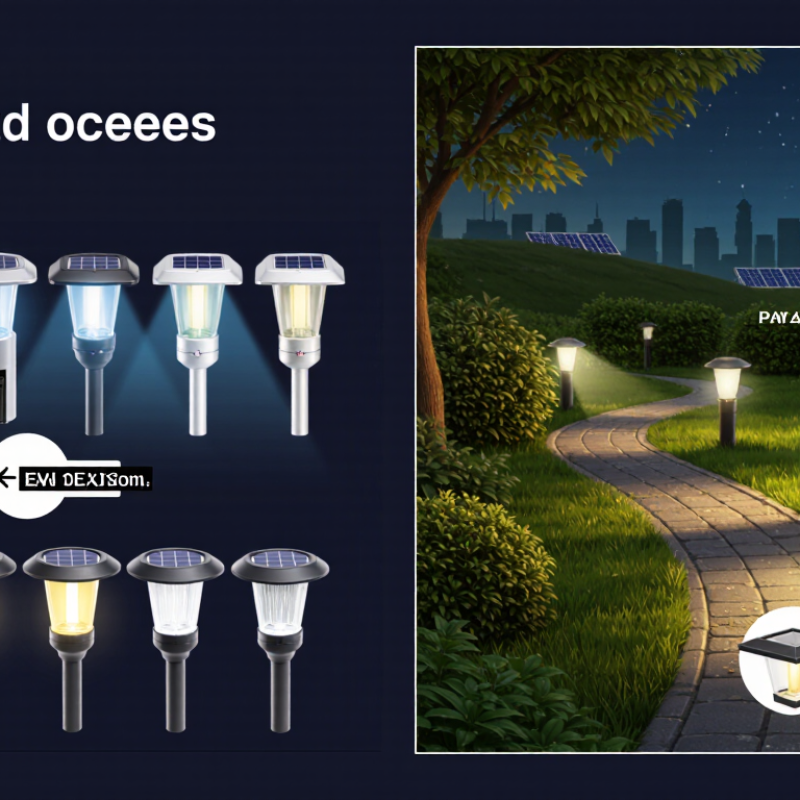
A solar light gathers energy through a small photovoltaic panel. Sunlight releases electrons inside the panel’s semiconductor cells, producing direct current. The panel does not store this energy; it only converts incoming light into electricity. Even a bright-looking day can provide less charging power if the panel sits under leaves or faces away from the sun.
A charge controller manages the electricity and sends it to a rechargeable battery, often a small lithium-ion or nickel-metal hydride cell. The controller helps prevent overcharging and may reserve enough power for the LED after dark. That is the loop. Battery capacity, panel size, and daily sunlight all affect how long the light can run.
At dusk, a light sensor signals the circuit to draw stored energy and illuminate the LED. The LED uses little power, but its brightness can still fade when the battery is low. I used to blame the bulb first; that is not always fair. Dust, winter shade, an aging battery, or several cloudy days can all reduce the charge. Wiping the panel with a damp cloth and checking its sun exposure can reveal a simple cause. Small details matter. A clean panel cannot fix a worn-out battery, though, so dim light may sometimes mean a part needs replacing.
Solar lights often grow dim because their rechargeable batteries lose capacity after repeated charge-and-discharge cycles. A light that once stayed bright until dawn may now fade after a few hours. That change is gradual, so it can be easy to blame the LED. The battery is often the better place to check. Cold nights can also reduce battery output temporarily, while short winter days provide less charging time.
Start with the simple details. Wipe dust, pollen, or bird marks from the solar panel with a damp cloth, then check whether nearby branches cast shade. Even a narrow strip of shadow can reduce charging. If the panel is clean and receives several hours of direct sun, inspect the battery compartment for moisture or corrosion. Follow the light’s instructions before opening it, and use only the specified replacement battery type. Small checks matter.
Not every dim light has one clear cause. I have seen a panel look clean while a thin film still dulled its surface; a quick wipe made a visible difference. But replacing the battery will not help much if the panel gets only weak daylight. Keep notes for a few sunny days. It makes the pattern easier to judge.
Solar panels gradually lose output as they age. This chart illustrates a 0.5% annual panel-degradation benchmark; it is not a prediction of a specific light’s brightness. Aging batteries, dirty panels, shade, and shorter winter days can also reduce a solar light’s brightness—sometimes more noticeably than panel aging alone.
Dim solar lights usually point to a charging problem, a tired battery, or a dirty panel. Check them after a full sunny day, not after cloudy weather. Make sure the switch is on and the panel receives several hours of direct sunlight. Shade from a new branch or a shifted garden pot can make a real difference. Wipe the panel gently with a damp cloth and let it dry. Then inspect the light for loose connections, moisture, or visible corrosion. Don’t force open a sealed unit.
Tips: Compare one dim light with a brighter one nearby. Check their sun exposure, panel cleanliness, and settings. Small differences matter.
If cleaning and better sunlight do not help, check the battery instructions before replacing anything. Use only the specified battery type and size; mismatched batteries may perform poorly or damage the light. A battery that has been through many charge cycles may no longer hold enough energy for the night. If you have a suitable meter and know how to use it, compare the battery reading with its stated rating. Otherwise, avoid guessing. I’ve seen people blame the lamp when a nearby tree was the real cause. It’s easy to miss. If a new battery and clear sunlight change nothing, the panel or internal electronics may need service or replacement.
China Top 10 Solar Lights: Why Are My Solar Lights Dim?
How to Restore Brightness and Prevent Future Dimming
Dim solar lights often have a simple cause: a dusty panel, partial shade, or a tired rechargeable battery. Wipe the panel with a damp microfiber cloth, then check whether branches or roof edges block midday sun. Even a small shadow can reduce charging time. After sunset, compare several lights in the same area; one weak unit may have a failing battery rather than a location problem. It is easy to blame the panel too quickly.
A 2013 NREL-authored review found a median annual degradation rate of about 0.5% across studied photovoltaic modules. That figure describes larger PV modules, not small garden-light panels, so it cannot predict a lamp’s brightness directly. Still, it shows why aging components deserve attention. If cleaning and better sun exposure do not help, replace the battery with the same chemistry and voltage specified by the light’s instructions. Avoid mixing old and new cells. Check again after a full sunny day.
Tips: Keep panels clear of dust and leaves, and place lights where they receive several hours of direct sun. In winter, shorter days and low sun angles can limit charging. Use the light’s lower-brightness setting, if available. Small fixes matter. A battery may still be the weak link.
When comparing China’s top 10 solar lights, look beyond advertised brightness. Compare measured lumens, battery capacity in watt-hours, panel wattage, and tested runtime side by side. A light rated at 1,000 lumens may dim quickly if its battery stores little energy. Check whether runtime claims assume a full charge and a specific brightness setting. Small detail, big difference.
Ask how the light performs after cloudy days, not just under ideal sun. NREL’s 2012 review, “Photovoltaic Degradation Rates—An Analytical Review,” found a median panel degradation rate of about 0.5% per year across nearly 2,000 reported rates. That is a broad benchmark, not a prediction for every small garden-light panel. Still, it suggests normal aging alone may not explain a sudden drop in brightness. Lighting Global’s quality-assurance framework also treats light output and operating time as useful performance measures. Compare those figures under matching test conditions, then check battery replacement options and weather protection. I would not trust a runtime number without its brightness setting; product listings do not always make that clear.
Compare these ten common solar-light product types by their typical design features, operating conditions, and the factors most likely to affect brightness. Specifications vary by model; use the product’s verified test data rather than appearance or headline claims when making a purchase.
| No. | Solar Light Type | Typical Application | Common Panel Design | Battery Details to Compare | Brightness and Runtime to Check | Why It May Look Dim | What to Compare Before Buying |
|---|---|---|---|---|---|---|---|
| 1 | Solar pathway stake light | Garden borders, paths, and low-level wayfinding | Small panel, often built into the top of the fixture | Check battery chemistry, capacity in mAh or Wh, replaceability, and whether the battery is included | Designed mainly for decorative or guidance lighting; check measured output and expected hours at the stated brightness | Small panel area, shade, dirty panel surface, short winter days, or an aged battery can limit stored energy | Panel dimensions, replaceable battery, waterproof rating, light distribution, and tested runtime |
| 2 | Solar wall security light | Doorways, side entrances, and small exterior areas | Integrated panel or a separate panel connected by cable | Compare battery capacity, battery type, charging time, and whether the battery can be replaced | Check whether the light uses motion-triggered high output, a lower standby level, or both | Frequent motion activation, a low state of charge, poor panel orientation, or an obstructed motion sensor may affect operation | Sensor range and angle, panel placement, brightness modes, battery capacity, and runtime after repeated activations |
| 3 | Solar floodlight with separate panel | Yards, driveways, sheds, and larger outdoor areas | Remote panel can be positioned toward direct sunlight independently of the lamp | Compare battery capacity in Wh where available, cell type, charge protection, and replacement options | Ask for measured lumens at the selected mode and runtime at that same mode | A high brightness setting uses stored energy quickly; a poorly placed panel or long cable connection can also reduce charging performance | Panel wattage and dimensions, cable length, measured output, beam angle, operating modes, and charging conditions |
| 4 | Solar street or area light | Roads, parking areas, pathways, and open spaces | Usually a larger panel mounted above or beside the luminaire | Check battery chemistry, usable capacity, operating temperature range, and replacement procedure | Compare verified lumen output, illumination distribution, autonomy, and output after several cloudy days | Undersized battery or panel, incorrect installation angle, shade, or a control system that reduces output to conserve charge | Photometric data, panel and battery sizing, pole-height recommendations, dimming schedule, and warranty terms |
| 5 | Solar post-cap light | Fence posts, deck posts, and garden walls | Compact panel integrated into the top surface | Confirm battery size, type, accessibility, and availability of a replacement battery | Check whether the design is intended for accent lighting or useful area illumination | The panel may face away from the sun; the cap or nearby structures can cast shade over the small panel | Post dimensions, panel orientation, downward light distribution, battery serviceability, and outdoor rating |
| 6 | Solar garden spot or uplight | Highlighting plants, trees, signs, and garden features | Integrated or adjustable panel; some versions separate the panel from the spotlight | Compare battery capacity and whether the battery supports the selected brightness mode | Check beam angle, measured output, color temperature, and runtime at full brightness | A narrow beam can make nearby surroundings seem dark; leaves or plant growth may shade the panel | Adjustable head and panel, beam angle, panel size, color options, and output-mode runtime |
| 7 | Solar step or stair light | Outdoor steps, deck edges, and low walls | Small integrated panel, commonly positioned on the upper face | Check battery type, capacity, replacement access, and charging performance in partial sun | Compare downward light pattern and visibility on the step, not just a lumen figure | Installation in a shaded riser, dirt on the panel, or a low battery can reduce the visible light | Mounting direction, glare control, weather resistance, panel exposure, and suitability for the intended step layout |
| 8 | Solar lantern | Patios, camping areas, and decorative outdoor lighting | Integrated panel on the top or a separate panel on some designs | Compare battery capacity, charging input, USB functions if included, and battery replacement options | Check runtime at each brightness setting and whether the light is omnidirectional or directional | Decorative diffusers spread light over a wide area and may appear less intense than a focused beam | Measured output, diffuser design, brightness controls, charging options, and runtime at the preferred setting |
| 9 | Solar string or festoon lights | Patios, pergolas, fences, and garden decoration | Separate panel commonly connects to the light string by cable | Check battery capacity, timer or control functions, and whether the battery is replaceable | Compare bulb count, spacing, total string length, light output per bulb, and runtime | Long strings divide available energy among many LEDs; a shaded or poorly aimed panel can leave the battery undercharged | Panel placement, cable length, bulb spacing, replacement bulbs, control modes, and full-string runtime |
| 10 | Solar shed or utility light | Sheds, garages, outbuildings, and covered work areas | Often a separate outdoor panel connected to an indoor lamp | Compare usable battery capacity, charging protection, battery type, and operating temperature range | Check measured output, coverage area, sensor behavior, and runtime at the chosen mode | The panel may be installed under an eave or in shade; repeated use at high output can drain the battery before dawn | Panel cable length, indoor/outdoor ratings for each component, mounting options, measured output, and battery serviceability |
Quick dim-light check: Clean the solar panel, confirm it receives several hours of unobstructed daylight, and check that the light’s switch is on. Allow the battery to recharge in good sunlight, then test the light after dark. If brightness remains low, check the battery condition, operating mode, sensor settings, and product instructions. Lumens describe light output; runtime depends on battery capacity, charging conditions, and power settings.
Its rechargeable battery may lose capacity after repeated charging cycles. A light that once lasted until dawn may now fade after a few hours.
Yes. Cold nights can temporarily reduce battery output, while short winter days leave less time for charging. Not always.
Wipe the panel with a damp cloth and check for shade from nearby branches. Even a narrow shadow can reduce charging. Small checks matter.
Check whether it receives several hours of direct sun. A clean panel with weak daylight may still charge poorly. Keep notes for a few sunny days.
Compare measured lumens, battery capacity in watt-hours, panel wattage, and tested runtime. A high lumen rating alone does not guarantee lasting brightness.
Runtime can change with the selected brightness and charging conditions. Compare figures tested under matching conditions; listings may leave out useful details.
If the panel receives too little sunlight, a new battery may not help much. Check for shade and surface film first.
Follow the light’s instructions before opening its battery compartment. Look for moisture or corrosion, and use only the specified battery type. I might still miss a less obvious cause.
This article explains how solar lights convert sunlight into electricity, store that energy in rechargeable batteries, and use it after dark. It explores common reasons for fading brightness, including limited sunlight, dirty or shaded panels, aging batteries, loose connections, and worn components. If you are wondering, “why are my solar lights dim,” a step-by-step diagnosis can help narrow down the cause, from checking panel exposure and cleaning surfaces to inspecting battery condition and connections.
The article also outlines practical ways to restore brightness and reduce future dimming, such as placing lights where they receive adequate sunlight, keeping panels clean, and replacing depleted batteries when appropriate. Finally, it offers useful comparison points for evaluating China’s top 10 solar lights, including brightness, battery capacity, runtime, charging performance, weather resistance, materials, and ease of maintenance, so readers can choose lights suited to their outdoor spaces and needs.

Soluxa Light