As solar lights gain popularity, many homeowners face a common issue: "why are my solar lights not charging?" Solar energy expert Dr. Emily Hart states, "Understanding the limitations of solar technology is crucial for effective use." Proper charging relies on multiple factors.
One primary concern is sunlight exposure. Inadequate light sources can hinder charging. Factors like location, weather, and even seasonal changes play significant roles. For instance, solar lights placed under trees or in shady areas may not receive enough sun.
Another issue arises from battery health. Homeowners often overlook battery maintenance. Old or damaged batteries can fail to hold a charge at all. Regularly checking and replacing solar batteries can enhance performance. Reflecting on these factors can help you address the frustrating problem of why your solar lights are not charging efficiently.
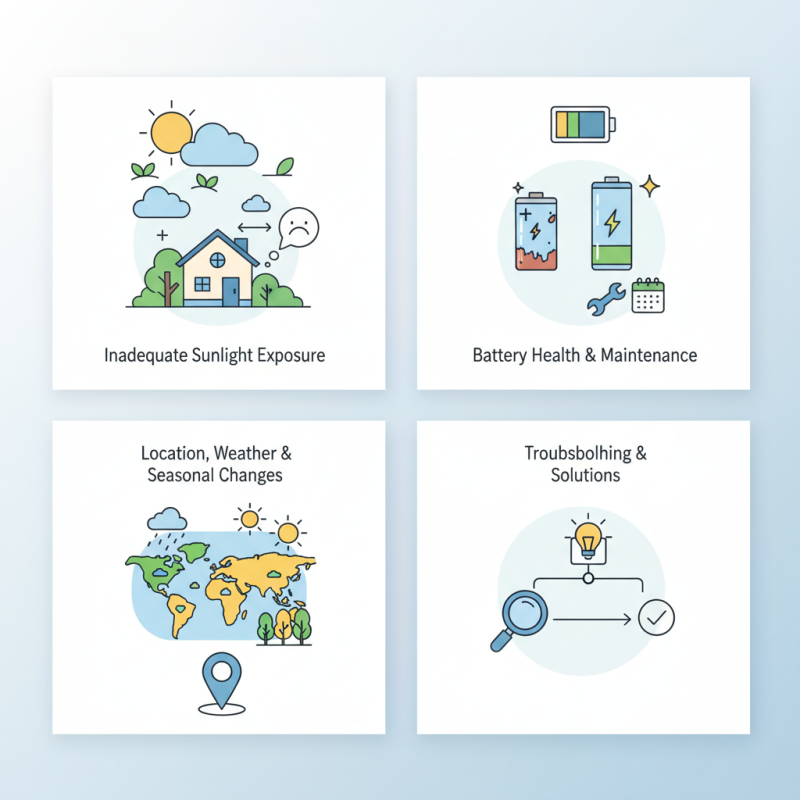
Solar lights are a wonderful addition to any outdoor space. However, sometimes they fail to charge effectively. Understanding the common reasons behind this issue can help in troubleshooting.
One frequent problem is insufficient sunlight exposure. If your solar lights are placed in an area with heavy shade, they won't receive enough light to charge. Consider moving them to a sunnier location for better performance. Dirt and debris on the solar panel surface can block sunlight too. Regularly cleaning the panels can improve their efficiency.
Another reason could be faulty batteries. Over time, rechargeable batteries can wear out. If your lights are older, this might be the issue. Replacing the batteries can restore functionality. Additionally, check the connections for rust or damage. Corroded wires can interrupt the charging process, causing frustration. Adjusting the placement and regularly maintaining your solar lights can significantly improve their charging capabilities.
Environmental factors play a crucial role in the charging efficiency of solar lights. Sunlight quality, along with duration, significantly impacts how well solar panels absorb energy. According to a report by the National Renewable Energy Laboratory, solar panel efficiency can drop by as much as 20% in cloudy or overcast weather. Urban areas with high pollution can further reduce sunlight penetration, affecting the performance of solar lights in those regions.
Temperature is another essential factor. Extreme heat or cold can hinder battery performance. Research from the Solar Energy Industries Association indicates that solar batteries perform best between 20-25 degrees Celsius. Any deviation can lead to a decline in charging ability. These fluctuations may not be apparent until the lights fail to function as expected.
Tip: Regularly clean your solar panels to remove dust and debris. This simple task can improve efficiency significantly.
Tip: Consider the orientation of your solar lights. Ensuring they face direct sunlight throughout the day can maximize energy absorption.
While solar lights aim for sustainability, environmental factors often present challenges. Reflect on your installation's placement and maintenance to enhance performance. Understanding these variables can lead to more reliable lighting solutions in diverse conditions.
This chart illustrates the environmental factors affecting solar light charging, including sunlight hours, temperature, and humidity levels. Understanding these factors can help improve the performance of solar lights.
Solar lights are a convenient way to illuminate outdoor spaces. However, inadequate charging can lead to disappointment. Regular maintenance is essential for optimal performance. According to a study by the Solar Energy Industries Association, improperly maintained solar lights can lose up to 30% efficiency over time.
Cleaning solar panels regularly is crucial. Dust and debris can block sunlight. A simple wipe with a damp cloth can improve absorption. Additionally, replacing batteries every few years is necessary. Batteries degrade, which can cause poor charging.
Check for obstructions. Trees or structures may block sunlight. Position solar lights in areas that receive at least six hours of direct sunlight daily. Consider seasonal changes in sunlight. During winter months, solar efficiency may decline.
Monitor weather conditions. Extended cloudy or rainy days can affect charging. Some lights can't function well in very cold temperatures. Make adjustments as needed. Remember, your solar lights perform best with a little attention and care.
Solar lights can be frustrating when they don’t charge. Many users find themselves dealing with this common issue. To identify the problem, check if the solar panel is dirty. Dust and debris can block sunlight. Research shows that a solar panel’s efficiency can drop by up to 25% when dirty. Regular cleaning can significantly improve performance.
Next, consider the environment where the lights are placed. Insufficient sunlight is a major factor. The Solar Energy Industries Association reports that optimal performance requires at least 6-8 hours of direct sunlight daily. If surrounding trees or buildings create shade, the lights will struggle to charge. Evaluating their location can reveal hidden issues.
Battery health is another critical aspect. A damaged or aging battery reduces charging capacity. Industry standards suggest replacing batteries every two to three years to maintain efficiency. Look for signs such as corrosion or leaks. These are indicators that the battery needs replacement. Ensuring all components function properly is essential for reliable performance.
Upgrading your solar lights is essential for maximizing charging efficiency. Research shows that inadequate sunlight exposure can reduce solar light performance. A study by the Solar Energy Industries Association noted that optimal sunlight for solar panels requires at least 6 hours of direct sunlight daily. Increasing the light’s exposure by positioning it in a sunny area is crucial.
Battery quality also affects performance. Many solar lights use NiMH or lithium-ion batteries, which have different capacities and charge times. A report from the National Renewable Energy Laboratory stated that high-capacity batteries can enhance charging efficiency by up to 30%. Upgrading to better batteries could be a key step, especially for older solar light models.
Solar panel maintenance is vital. Dirt and debris can block sunlight, resulting in minimal power generation. Data indicates that cleaning solar panels regularly can improve their efficiency by as much as 15%. Regularly checking for damage or debris is often overlooked but is necessary. Making these upgrades and maintaining your solar lights can ensure better charging and longer lifespans.
| Issue | Possible Causes | Solutions | Estimated Upgrade Cost |
|---|---|---|---|
| Lights not turning on | Insufficient sunlight, faulty solar panel | Reposition lights, replace solar panel | $15 - $50 |
| Dim light output | Old or degraded batteries | Replace batteries, upgrade to higher capacity | $10 - $30 |
| Inconsistent charging | Dirty solar panels, poor alignment | Clean panels, adjust position | $5 - $20 |
| Frequent battery replacement | Low-quality batteries | Upgrade to lithium-ion batteries | $20 - $60 |
| Solar lights not charging | Faulty controller, wiring issues | Check wiring, replace controller | $30 - $80 |
: Insufficient sunlight exposure is a common issue. Check for shade around your lights.
Dirt on solar panels blocks sunlight. Regular cleaning can help maintain efficiency.
Faulty batteries can be the reason. Replacing older batteries can restore function.
Clean your solar panels regularly. A damp cloth can effectively remove dust and debris.
Yes, trees or structures may obstruct sunlight. Ensure lights receive direct sun for hours.
Solar efficiency declines in winter months. Seasonal changes can significantly affect charging.
Move them to sunnier spots. They need at least six hours of sunlight daily.
Extended cloudy days can hinder charging. Cold temperatures may also affect functionality.
Regular maintenance is key. Check connections for rust and replace batteries every few years.
In the realm of solar energy, many users often find themselves asking, "why are my solar lights not charging?" This question can arise from several common reasons, such as inadequate sunlight exposure, dirty solar panels, or battery issues. Environmental factors, including seasonal changes and weather conditions, can further impact the charging efficiency of solar lights.
To ensure optimal performance, regular maintenance is essential. Cleaning the solar panels and replacing batteries when necessary can significantly enhance charging capabilities. Additionally, following troubleshooting steps can help identify and resolve issues with non-charging solar lights. For those seeking improved efficiency, upgrading to more advanced solar models can also be a worthwhile investment. By addressing these factors, solar light users can maximize their devices' performance and enjoy a well-lit environment.

Soluxa Light