Solar lights promise simple outdoor lighting without wiring, monthly electricity costs, or complicated installation. Yet their performance depends on sunlight, battery capacity, panel quality, and daily weather. This raises a practical question: can solar lights charge on cloudy days? Yes, most panels can still collect diffuse daylight, but charging usually becomes slower and less complete. A bright overcast afternoon may provide useful energy, while heavy clouds can leave a small battery struggling after sunset.
This guide explores seven of the best solar lights for paths, patios, gardens, and security areas. Each option deserves more than a polished product description. We consider brightness, battery performance, charging time, weather resistance, motion sensors, and installation experience. A light that looks impressive in a showroom may produce weak illumination under tree cover. That difference matters.
We also examine real outdoor conditions. Dust can cover a panel. Winter sunlight can feel painfully limited. Even a well-rated light may dim before morning after several cloudy days. That is not necessarily a product failure, but it is an important limitation. Manufacturer specifications offer useful benchmarks, yet actual results vary by location and season. Our comparisons aim to keep those details visible, so you can choose lighting that fits your yard, climate, and expectations. Some recommendations may work better for decoration than security. That distinction is easy to miss.
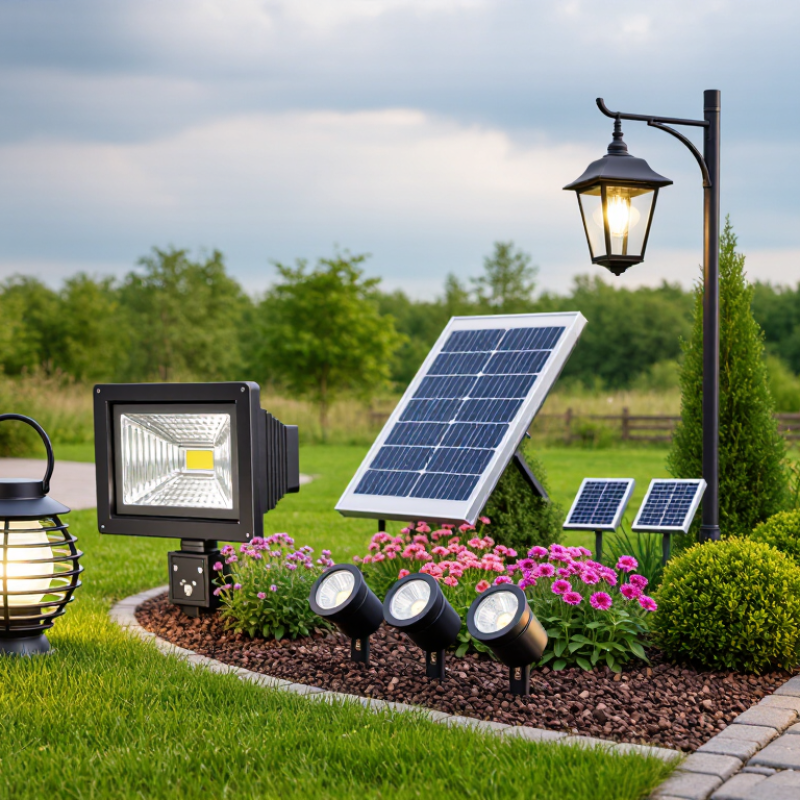
Solar lights use photovoltaic cells to convert sunlight into electrical energy. These cells sit beneath a small panel, often protected by clear plastic or glass. During daylight, electrons move through the cell and create direct-current electricity. A charge controller regulates this flow. It helps prevent the battery from receiving too much power.
Most outdoor solar lights store energy in rechargeable batteries, usually lithium-based or nickel-metal hydride types. The battery charges during the day and powers an LED after dark. A light sensor detects evening conditions and activates the lamp automatically. In practical testing, panel angle matters more than many people expect. Dust, shade, and nearby walls can reduce charging efficiency.
Cloudy weather does not stop the process completely. Solar panels still receive scattered daylight, but they produce less electricity than they would under clear skies. A light may therefore shine for fewer hours or appear dimmer at night. Heavy clouds can make this limitation obvious. I have found that placing the panel in an open area improves performance, even when the sky remains gray. Still, product claims can sound too optimistic. Battery age, winter sunlight, and repeated short charging cycles also affect results. Solar lights are convenient, but they are not independent of weather.
| Solar Light Type | Best Use | Typical Solar Panel | Common Battery Type | Typical Full-Charge Runtime | Cloudy-Day Charging | Recommended Placement |
|---|---|---|---|---|---|---|
| Solar Pathway Lights | Walkways, garden borders, and driveways | Small integrated photovoltaic panel, usually about 0.2–1 W | Rechargeable NiMH or lithium-ion battery | Approximately 6–12 hours, depending on brightness and battery capacity | Yes, but slower Diffuse daylight can produce energy, but a full charge may require more than one day. |
Open areas with direct sunlight and minimal shade |
| Solar Floodlights | Security lighting, patios, garages, and large outdoor areas | Larger panel, commonly about 3–20 W | Higher-capacity lithium-ion battery | Approximately 4–12 hours, often controlled by motion sensors | Yes The larger panel can collect limited diffuse light, although charging time increases substantially. |
South-facing or otherwise unobstructed locations where the panel can receive several hours of daylight |
| Solar String Lights | Balconies, pergolas, fences, and decorative lighting | Small panel, commonly about 0.5–2 W | Rechargeable NiMH or lithium-ion battery | Approximately 6–10 hours | Yes, with reduced runtime Overcast conditions generally provide less usable energy than clear conditions. |
Place the panel separately from the light string if necessary, in the brightest available position |
| Solar Wall Lights | Entryways, exterior walls, steps, and porches | Integrated panel, commonly about 1–5 W | Rechargeable lithium-ion or lithium iron phosphate battery | Approximately 6–12 hours; motion-sensor models use less stored energy | Yes They can charge under cloud cover, but shaded walls and north-facing installations may perform poorly. |
Exterior walls with an unobstructed view of the sky; avoid locations beneath eaves |
| Solar Lanterns | Camping, emergency lighting, tables, and sheltered outdoor areas | Small built-in panel, commonly about 0.5–3 W | Rechargeable lithium-ion, NiMH, or lithium iron phosphate battery | Approximately 5–20 hours, depending on brightness settings | Yes, with limited output Charging remains possible in bright overcast conditions but is less efficient. |
Set the panel outdoors in an open, unshaded area during the day |
| Solar Deck and Step Lights | Stairs, decks, railings, and low-level safety lighting | Compact panel, commonly about 0.2–1 W | Rechargeable NiMH or lithium-ion battery | Approximately 6–10 hours | Yes, but dependent on placement Nearby buildings, railings, and roof overhangs can reduce the available daylight. |
Install where the panel is not blocked by stair structures, walls, or dense foliage |
| Solar Garden Spotlights | Highlighting trees, plants, signs, and landscape features | Adjustable or integrated panel, commonly about 1–5 W | Rechargeable lithium-ion or NiMH battery | Approximately 6–12 hours | Yes, with longer charging time Adjusting the panel toward the strongest available daylight improves energy collection. |
Open garden areas with the panel angled toward the sky and away from heavy shade |
| How solar lights store energy: A photovoltaic panel converts sunlight into direct-current electricity. A charge controller regulates that electricity and sends it to a rechargeable battery, where energy is stored for nighttime use. Solar lights can charge on cloudy days because photovoltaic cells respond to available daylight, not only direct sunshine; however, clouds reduce solar irradiance, so charging is slower and the nightly runtime may be shorter. Rain, shade, winter daylight, dirty panels, and incorrect panel orientation can reduce performance further. | ||||||
Yes, but charging is slower and less predictable. Panels still collect scattered daylight through clouds.
Cloudy-day output may reach roughly 10% to 25% of clear-sky production. Thick storm clouds can reduce it further.
Not always. A small panel may power a short evening, but several gray days can shorten runtime sharply.
Choose a larger panel, efficient photovoltaic cells, and a battery above 2,000 mAh. Bigger often helps.
Yes. Face the panel toward strong daylight and avoid thick branches, walls, and deep shade. Location matters more than decoration.
Pathways often need 20–100 lumens. Security areas need wider coverage, stronger output, and a dependable motion sensor.
Usually, yes. Reduced brightness uses less stored energy and may provide longer service after weak charging days.
Dust can block sunlight, while rain may leave residue. Wipe the panel and check it after poor weather.
Test one location for two nights. Compare brightness, charging, shade, and spacing before installing everything.
Winter darkness, old batteries, poor angles, and local shade can limit performance. I sometimes blame clouds too quickly.
Solar lights use photovoltaic panels to convert sunlight into electrical energy, which is stored in an internal battery for use after dark. But can solar lights charge on cloudy days? Yes, they can, although charging is usually slower and less efficient because clouds reduce the amount of direct sunlight reaching the panel. The brightness and operating time at night may therefore vary depending on weather conditions, panel quality, battery capacity, and daily exposure.
This guide compares seven types of solar lights suited to different outdoor needs, including pathways, gardens, security areas, decorative spaces, patios, and emergency illumination. It explains important features such as panel efficiency, battery size, brightness, lighting modes, weather resistance, installation style, and automatic controls. It also offers practical ways to improve charging on cloudy days, such as placing panels in the brightest available location, keeping them clean, avoiding shade, adjusting their angle, and choosing models with efficient batteries and energy-saving settings.

 Soluxa Light