When considering the question, "do solar garden lights need direct sunlight," it's essential to understand how these solar devices operate. According to Sarah Thompson, a solar energy expert from the Green Energy Institute, "Solar garden lights can still charge in indirect sunlight, but direct sunlight enhances their efficiency." This insight highlights the role of sunlight in the functionality of solar garden lights.
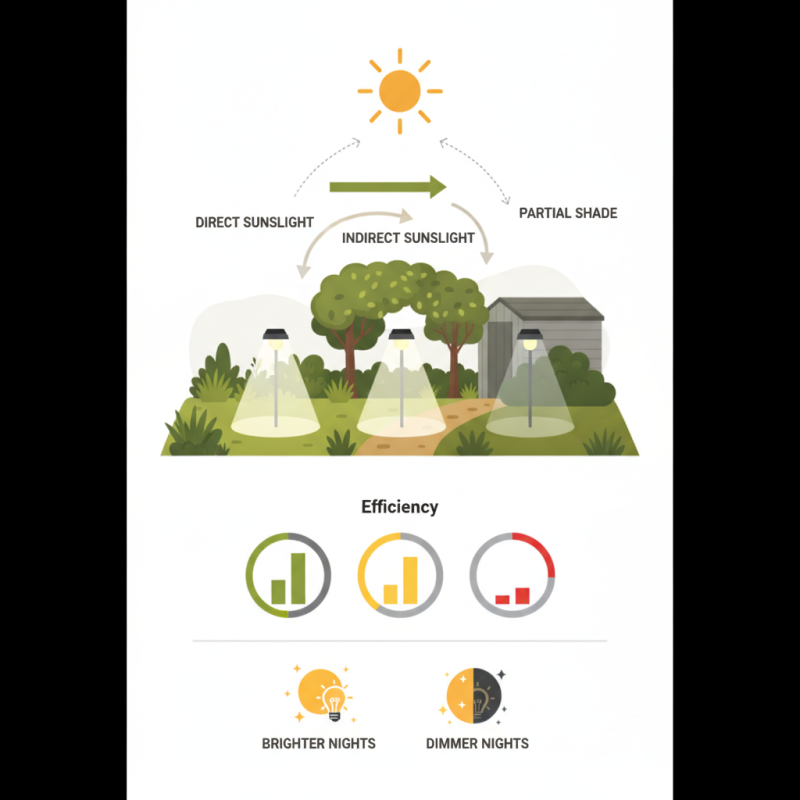
Solar garden lights are designed with photovoltaic cells that convert sunlight into electricity. However, many users often wonder if partial shade affects performance. Gardens are not always sunny spots. Trees and structures can cast shadows that limit direct sunlight. As Thompson points out, while these lights work with indirect sunlight, their brightness may diminish. This factor raises questions about placement and usage.
Incorporating solar lights into a garden requires some planning. Observing the sunlight patterns throughout the day can aid in maximizing efficiency. Some users might find themselves frustrated if their lights don't shine as bright as expected. It's important to consider local conditions and light exposure. Understanding the need for direct sunlight can lead to better choices and brighter nights.
Understanding Solar Garden Lights and Their Functionality
Solar garden lights harness energy from the sun. They typically rely on solar panels to convert sunlight into electricity. However, many people wonder about their effectiveness in shaded areas. These lights can still function in indirect sunlight, but their performance may decrease.
To maximize energy absorption, place your solar lights in spots with the most exposure during the day. Consider areas that receive direct sunlight for at least six hours. If your garden has many trees or buildings, identify the sunniest locations. This will enhance the lights' brightness and efficiency.
**Tip:** Regularly clean the solar panels. Dust and debris can block sunlight, reducing energy capture.
Ensuring battery health is also crucial. If the lights flicker or dim, the batteries may need replacement. They tend to lose efficiency over time. Opting for higher-capacity batteries can provide longer operation after a single sunny day.
**Tip:** Check the manufacturer's guidelines for battery maintenance. This helps to extend the life of your solar garden lights. Adjusting the location or cleaning them can significantly improve their functionality.
Do Solar Garden Lights Need Direct Sunlight to Function?
| Feature |
Description |
| Power Source |
Solar energy collected through photovoltaic cells. |
| Direct Sunlight Requirement |
While direct sunlight is ideal, indirect sunlight can still allow functionality. |
| Charging Duration |
Typically requires 6-8 hours of sunlight for full charge. |
| Run Time |
Can run for 8-12 hours on a full charge, depending on model. |
| Installation |
Easy installation; no wiring needed. Place in a sunny spot. |
| Weather Resistance |
Most models are water-resistant and suitable for outdoor use. |
The Role of Sunlight in Solar Panel Efficiency
Solar garden lights primarily rely on sunlight to charge their batteries during the day, allowing them to illuminate at night. However, they do not necessarily need direct sunlight to function effectively. In fact, recent studies show that solar panels can generate energy from diffused sunlight as well. According to the National Renewable Energy Laboratory, solar panels maintain efficiency levels up to 25% even on cloudy days.
The efficiency of solar panels is influenced by several factors, including the angle of the panels and the amount of available light. Research indicates that partial shade can reduce output by 50% or more, depending on conditions. For garden lights, this means they can still operate with indirect sunlight. A practical installation under tree canopies may still yield some light, although not at peak efficiency.
While most solar garden lights perform well in full sun, they might struggle in heavily shaded areas. The energy stored from shorter sunlight exposure needs to be understood. This variability can lead to unexpected results, where lights may dim faster than anticipated. Understanding these nuances helps users set realistic expectations for their solar lighting systems.
Solar Panel Efficiency in Varying Sunlight Conditions
Can Solar Garden Lights Work in Shade or Indirect Light?
When considering solar garden lights, many people wonder about their performance in shaded areas. While sunlight is essential for solar lights to charge efficiently, they can still function in indirect light. These lights absorb energy from the sun during the day, which powers them at night. However, the intensity and duration of light can significantly affect their brightness and longevity.
Solar lights placed in partially shaded spots may not achieve full brightness. This often leads to shorter operating times at night. Gardens filled with tall trees or nearby structures can create challenges. It’s essential to optimize placement for better performance. Experimenting with different locations can help find the best spots for light absorption.
Some homeowners find that only placing solar lights in direct sunlight yields the best results. However, those seeking aesthetic options might need to compromise. In certain conditions, lights may operate dimmer than expected. Understanding these limitations can lead to better decisions about garden lighting. Overall, while solar garden lights can work in indirect sunlight, optimal performance comes from careful placement and consideration of light exposure.
Factors Affecting Solar Light Performance Beyond Sun Exposure
When discussing solar garden lights, it's essential to consider factors beyond direct sunlight. Solar lights operate based on the energy they receive from sunlight, but their performance can vary significantly. According to a report from the Solar Energy Industries Association, solar lights can still function with as little as 4 hours of sunlight per day. However, insufficient sunlight is not the only consideration.
Temperature affects performance too. Solar batteries often lose charging efficiency in cold conditions. For instance, temperatures below 32°F can reduce battery efficiency by over 20%. This impact is overlooked by many users, yet it plays a crucial role in nighttime illumination. Furthermore, the location of the solar lights matters. Shading from nearby trees or buildings can drastically reduce exposure and output, potentially leaving your garden dimly lit during evenings.
Another critical factor is the quality of the solar panel and battery. Lower-quality materials can result in reduced energy absorption and storage. It's reported that premium solar panels can operate at 20% efficiency, while cheaper options might drop to 10%. This difference in manufacturing standards illustrates the importance of informed choices when selecting solar garden lights. Evaluating these factors can ensure that your outdoor spaces remain beautifully lit, even under less-than-ideal conditions.
Maintenance Tips for Enhancing Solar Garden Light Efficiency
Solar garden lights are a popular choice for eco-friendly outdoor lighting. To enhance their efficiency, proper maintenance is essential. Many users underestimate the impact of dirt and debris on solar panels. According to the Solar Energy Industries Association (SEIA), a clean solar panel can produce up to 30% more efficiency compared to a dirty one. Regular cleaning, at least twice a year, ensures they absorb maximum sunlight.
Battery performance is another critical factor. Most solar lights use nickel-cadmium or lithium-ion batteries. These batteries should be replaced every one to two years. A degraded battery can result in dim lighting. There is also a tendency to overlook the importance of positioning. Placing solar lights in shaded areas reduces their efficiency. Aim for locations with at least six hours of direct sunlight daily. This simple adjustment can significantly improve their performance.
Lastly, investing in a smart charging unit might be beneficial. It allows for controlled charging cycles. This can extend the life of batteries and enhance overall performance. Many users, however, often neglect such upgrades, focusing solely on aesthetics. Reflecting on these maintenance strategies can lead to brighter and more efficient solar garden lighting solutions.
FAQS
: They harness sunlight through solar panels, converting it into electricity for night use.
Yes, but their performance decreases significantly in shade or indirect light.
Aim for spots with at least six hours of direct sunlight daily.
This may indicate that the batteries need replacement or maintenance.
Regularly clean solar panels to ensure maximum sunlight absorption.
Yes, they can extend the lights' operational time after a sunny day.
Experiment with different placements or ensure they’re receiving adequate sunlight.
Lights in shaded areas often operate dimmer and for shorter durations.
Yes, it helps improve functionality and extends the overall life of the lights.
Usually not; lighting may be dimmer than expected without direct sunlight exposure.
Conclusion
Solar garden lights offer an eco-friendly way to illuminate outdoor spaces, but a common question arises: do solar garden lights need direct sunlight to function? Understanding the basics of solar garden lights reveals that they primarily rely on solar panels to convert sunlight into electricity, which powers the LED lights. Direct sunlight enhances the efficiency of these panels, but it is important to note that solar lights can still operate in shaded or indirect light conditions.
Factors such as the battery capacity, the quality of the solar panel, and the surrounding environment also play critical roles in the performance of solar lights beyond just sun exposure. To maximize efficiency, regular maintenance, such as cleaning the solar panels and ensuring the batteries are in good condition, can significantly enhance the functionality of solar garden lights, even when they do not receive abundant direct sunlight.

 Soluxa Light