Do Solar Garden Lights Need Direct Sunlight in 2026?

Time:2026-11-01 Author:Charlotte
0%

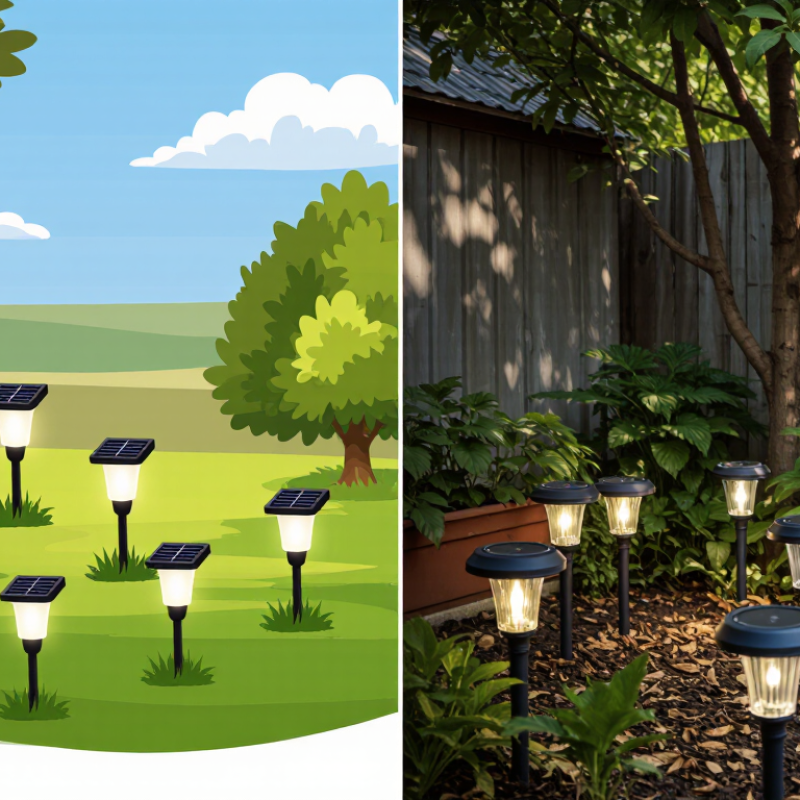
Do solar garden lights need direct sunlight? Not exactly. Direct sun usually charges their small panels faster, but bright, indirect daylight can still produce electricity. On an overcast afternoon, a light may charge less and shine for fewer hours. It may not fail outright.

This distinction appears in professional solar-resource data. The U.S. National Renewable Energy Laboratory’s National Solar Radiation Database tracks global, direct, and diffuse solar irradiance. Those categories matter: a panel receives more than one kind of sunlight. NREL’s PVWatts documentation also estimates solar production using weather and irradiance inputs, not a simple sun-or-no-sun rule. These tools model larger systems, so their figures should not be applied directly to a tiny garden-light panel. Still, they explain why daylight can help even without a sharp patch of sunshine.

In practice, placement and product design matter. A panel beneath dense leaves or beside a tall wall may receive too little light for a full night’s runtime. Try a sunnier spot, wipe off dust, and check whether the panel faces the open sky. A few hours of direct sun can help. Yet battery age, panel size, and winter daylight also affect performance. I used to treat “shade” as one condition; that was too simple. Light shade and deep shade are not the same. Check the light after dusk, then adjust its position before assuming it is defective.
Do Solar Garden Lights Need Direct Sunlight in 2026?

How Solar Garden Lights Convert Irradiance into Stored Battery Energy

Solar garden lights do not need uninterrupted direct sunlight, but stronger daylight usually means more energy stored for evening use. Their small photovoltaic panel absorbs irradiance, the sunlight reaching its surface, and converts part of it into direct-current electricity. Even on a bright overcast day, diffuse light can produce some power. Deep shade is different. A fence shadow or dense tree canopy can reduce the panel’s output sharply.

A charge-control circuit regulates the incoming electricity and directs it to the rechargeable battery. The battery stores chemical energy, then supplies the LED after a light sensor detects dusk. This process is not perfectly efficient: heat, cloudy weather, panel angle, and battery condition all affect how long a lamp stays lit. A practical check is to inspect the panel around midday. Is a branch casting a narrow shadow across it? Moving the light a short distance into open sky may help. Yet one sunny afternoon cannot reveal the whole pattern; winter days and several cloudy evenings can expose limits that were easy to miss. Cleaning dust from the panel also helps, though it will not fix persistent shade.

Direct Sun or Bright Shade? IEC 61215 STC Uses 1,000 W/m² at 25°C

Do Solar Garden Lights Need Direct Sunlight in 2026?

IEC 61215 uses Standard Test Conditions (STC): 1,000 W/m² of irradiance, a 25°C cell temperature, and an AM1.5 solar spectrum. These are laboratory reference conditions for comparing photovoltaic module performance, not a minimum sunlight requirement for a garden light. That distinction matters. A small panel can still collect diffuse daylight in bright shade, although charging will usually be slower than in an unobstructed sunny spot. The National Renewable Energy Laboratory’s PVWatts documentation likewise models output using changing irradiance and module temperature, rather than assuming constant STC conditions.

In practice, check the panel at midday: does direct sun reach it, or do branches and walls leave it dim? Seasonal shade can change the answer. Even a bright patio may receive much less solar energy than the STC benchmark, and a cloudy afternoon may leave a light with fewer hours of operation. I’ve found placement is often the overlooked variable; moving a panel a short distance can help, but results vary with weather, panel angle, and battery condition. No neat guarantee here. IEC 61215 describes standardized module testing, not a promise that a particular light will run all night.

Do Solar Garden Lights Need Direct Sunlight in 2026? - Direct Sun or Bright Shade? IEC 61215 STC Uses 1,000 W/m² at 25°C

Outdoor light condition What reaches the solar panel Likely charging effect Practical placement advice
Unobstructed direct sun Direct solar irradiance falls on the panel; the amount changes with season, latitude, weather, panel angle, and time of day. Generally offers the strongest charging opportunity and is the best starting point for placement. Choose a location with several hours of sun where possible, and keep the panel surface clean and unshaded.
Bright open shade The panel receives diffuse skylight, but nearby trees, walls, or roofs may block part of the available light. Charging can still occur, but it is usually less effective than in unobstructed sun; nighttime duration or brightness may be reduced. Try a brighter, more open position and compare performance over several days of similar weather.
Partial shade Direct light reaches the panel for only part of the day, or is interrupted by moving shadows. Results vary with the length and timing of the sunny periods and with the light's panel and battery design. Track the sun across the day; even a small change in position may reduce shadow time.
Overcast or rainy weather Clouds reduce the sunlight reaching the panel, though some diffuse daylight may remain. Charging is generally lower than on a clear day, so the light may run for less time or appear dimmer at night. Allow for weather-related variation; a cloudy day does not necessarily mean charging stops completely.
Indoor window light Glass and the indoor location alter the light reaching the panel; intensity depends on window orientation, glazing, distance, and obstructions. Charging may be limited and is not equivalent to placing the panel outdoors in direct sun. Use outdoor placement if the light is designed for it, following the product's weather and installation instructions.
Night or very dim conditions Very little light is available for photovoltaic conversion. Meaningful charging should not be expected. Position the panel where it can receive daylight; avoid relying on porch or indoor lamps as a substitute for sunlight.
How to read the IEC 61215 STC reference: Standard Test Conditions (STC) for photovoltaic module rating use 1,000 W/m² irradiance, a cell temperature of 25°C, and an AM1.5 reference solar spectrum. These laboratory conditions provide a standardized rating basis; they are not a minimum sunlight requirement for a garden light to charge outdoors.

Why Shade, Panel Tilt, and Winter Day Length Reduce Daily Charge

Do Solar Garden Lights Need Direct Sunlight in 2026?

Direct sun is best, but it is not an all-or-nothing rule. Garden lights can charge under bright cloud or partial shade, though their small panels collect less energy. A few hours beneath dense leaves may matter more than a brief shadow from a fence. Even dust can quietly cut the light reaching the panel.

Panel angle changes how much sunlight it catches. NREL’s PVWatts documentation treats panel tilt, orientation, and available solar radiation as key inputs when estimating photovoltaic output. That principle applies to small garden panels too: a panel facing the open sky generally fares better than one tilted toward a wall or shaded by a railing. Still, adjusting the angle is not magic. A poorly placed light may remain poorly placed.

Winter brings another limit: fewer daylight hours. NOAA’s Solar Calculator estimates about 9 hours 20 minutes of daylight near the December solstice at 40° north, compared with roughly 15 hours near June’s solstice. That shorter window leaves less time to recharge, especially on cloudy days. Small panels notice. If a light fades early, compare its winter performance with a sunny summer day before assuming it has failed. The comparison is useful, but not perfect.

Estimate Night Runtime: Battery Energy (Wh) ÷ LED Load (W) ≈ Hours

For a quick runtime estimate, convert the battery rating to watt-hours, then divide by the LED load: battery energy (Wh) ÷ LED power (W) ≈ hours. A 3.7-volt, 1.2-amp-hour battery stores about 4.4 Wh. With a 0.2-watt LED, the ideal estimate is roughly 22 hours. That is ideal math. The controller, wiring, battery age, and dimming can reduce actual runtime.

The U.S. Department of Energy reports that LEDs use at least 75% less energy than incandescent lighting. Still, use the light’s measured load, not an incandescent comparison, for your calculation. A small garden light may list battery capacity in milliamp-hours; multiply by its nominal voltage, then divide by 1,000 to estimate Wh. Real life differs. A cloudy afternoon may leave the battery partly charged, so the lamp could run for fewer hours even when the arithmetic looks generous.

Direct sun helps, but it is not the only factor. NREL’s National Solar Radiation Database provides hourly solar-irradiance data, reflecting how sunlight varies by location, season, and weather. A shaded panel under tree leaves may collect less energy than one facing an open sky. Try a full-charge test on the actual path. I would not treat one night’s result as a guarantee; cold weather and aging batteries can shift it.

How to Compare Sites: Track Charging and Runtime in Sun and Shade

Do Solar Garden Lights Need Direct Sunlight in 2026?

To compare sunny and shaded spots, use the same light in each location rather than comparing different units. Place it where you plan to install it, and keep the panel clean and facing the same direction. Record direct-sun hours, weather, and charging time each day. Keep it simple. Test for at least several days, since one cloudy afternoon can distort the result. Note when the light turns on and when it noticeably dims or goes out. That gives you a practical runtime estimate, not just a guess based on brightness.

Repeat the test in a sunnier spot, keeping the light’s settings and test period consistent. If possible, compare results during similar weather and seasons; winter sun and summer sun are not equivalent. Clouds matter. Shade is also uneven: a spot under a tree may get brief sun patches, while a porch receives mostly reflected daylight. Write down those details, even if the notes feel fussy. A simple table of charging conditions and nighttime runtime can reveal whether the shaded location still meets your needs. Battery age, temperature, and panel angle can affect results, so treat one test as a useful clue, not a guarantee.

Do Solar Garden Lights Need Direct Sunlight in 2026?

Compare daily sun exposure with nighttime runtime across three site conditions.

How to read this: These illustrative example values show why a sunnier location often supports longer runtime. Actual results vary with weather, season, panel angle, battery condition, and the light’s design. For a fair comparison, use the same light in each location and log charging conditions and runtime over several days.

FAQS

Do solar garden lights need direct sunlight?

Direct sunlight usually gives small panels more energy. Bright cloud or partial shade can still provide some charge. Not all-or-nothing.

Can a light charge beneath a tree?

It may charge, but dense leaves can block much of the available light. Brief sun patches may help. Check the panel for dust, too.

Does panel angle affect charging?

Yes. A panel facing open sky generally catches more sunlight than one tilted toward a wall. Adjusting it may help, but placement still matters.

Why do garden lights often run shorter in winter?

Winter days are shorter, leaving less time to recharge. Near 40° north, daylight lasts about 9 hours 20 minutes around the December solstice. Clouds can reduce charging further.

How can I compare sunny and shaded locations?

Test the same light in both spots. Keep its settings and panel direction consistent, and record sunlight, weather, and nighttime runtime.

How long should I test each location?

Try several days at minimum. One cloudy afternoon can skew the result. A longer test is better, though still not a guarantee.

What details should I record during a test?

Note direct-sun hours, weather, charging time, and when the light dims or goes out. A small table helps. A little fussy, perhaps.

If a light fades early, has it failed?

Not necessarily. Compare its runtime after sunny days with its winter performance. Battery age, temperature, shade, and panel angle can all affect the result. One test can mislead.

Conclusion

Do solar garden lights need direct sunlight? Not necessarily, but stronger, unobstructed sunlight generally helps their panels collect more energy and charge the battery more quickly. Solar panels convert incoming light into electrical energy that is stored for use after dark. The 1,000 W/m² irradiance and 25°C temperature used in IEC 61215 standard test conditions provide a reference point, not a guarantee of the output a garden panel will achieve outdoors. Bright shade can still provide useful light, though trees, buildings, poor panel angle, and shorter winter days can all reduce the energy collected.

To estimate how long a light may run, divide the battery’s stored energy in watt-hours by the LED’s power draw in watts; the result is an approximate runtime in hours. Real performance can vary with charging conditions and battery behavior. For a practical comparison, place the light in different candidate spots and track both its daytime charging and nighttime runtime over several days. This helps reveal whether a sunny location or bright-shade site better suits your garden.

Charlotte

Charlotte

Charlotte is a seasoned marketing professional with a deep understanding of the company's portfolio and a passion for elevating its presence in the market. With a keen eye for detail and a commitment to excellence, she ensures that our professional blog is regularly updated with insightful articles......