As solar technology evolves, questions remain about its efficiency. One common inquiry is: can solar lights charge on cloudy days? This topic is essential for anyone considering solar-powered solutions. It’s crucial to understand how solar lights function during less-than-ideal weather conditions.
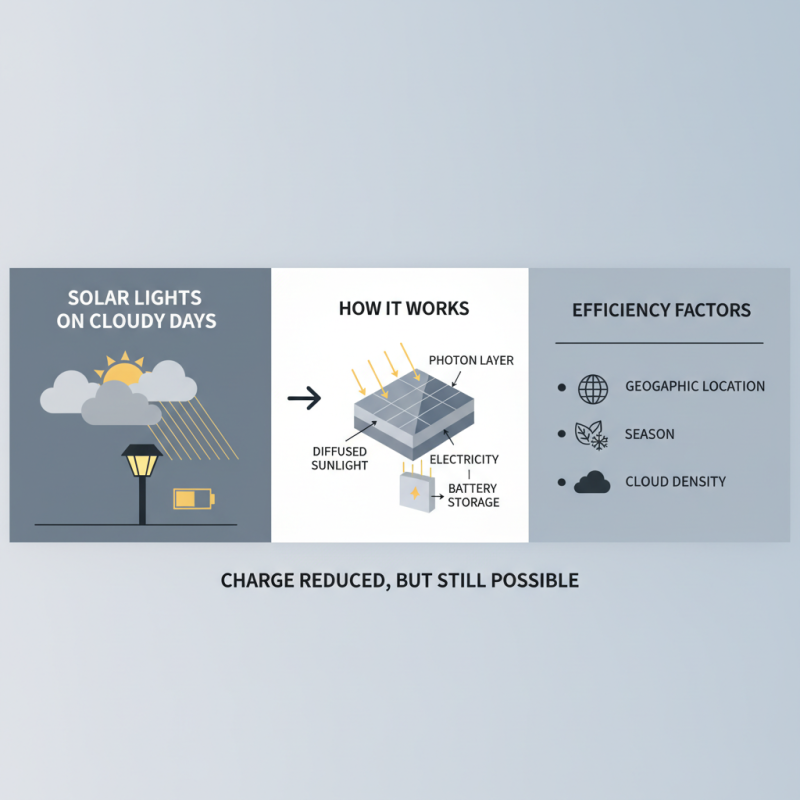
Solar panels rely on sunlight. However, they don’t need direct sunlight to generate power. Even on cloudy days, solar lights can still capture diffused sunlight. This means they can charge, albeit less effectively. Many users might expect full functionality under overcast skies, but that’s not the reality. Cloud cover will reduce energy capture.
Some argue that solar lights may not perform adequately during persistent cloudy weather. Others believe they can still function well enough. It’s important to evaluate how much sunlight your area receives throughout the year. Factors like geographic location and the season play a significant role. Thus, while it’s evident that solar lights can charge on cloudy days, the efficiency varies significantly. Understanding these nuances is vital for effective solar lighting use.
Understanding Solar Light Functionality on Cloudy Days
Solar lights can indeed charge effectively on cloudy days, but the efficiency varies. Solar panels convert sunlight into energy. On cloudy days, they harness diffuse sunlight. Research indicates that solar panels can still produce about 10-25% of their peak output in such conditions. This might sound low, but it can still provide enough energy for certain applications.
Professional studies suggest that the clarity of the sky significantly affects solar efficiency. For instance, overcast days allow for enough light penetration. However, consistently low light conditions can impact battery charge times. While some users expect solar lights to perform as if it were sunny, it's essential to manage expectations regarding output.
Moreover, the angle and placement of solar panels can enhance performance. Optimizing these factors can help capture more light in less-than-ideal conditions. Many consumers should also consider the quality of batteries used. In some cases, lower-quality batteries may not hold a charge effectively, leading to disappointment. Understanding these nuances can lead to better solar energy usage. This approach reflects the importance of realistic expectations coupled with practical solutions.
The Science Behind Solar Energy Generation in Overcast Conditions
Solar lights utilize photovoltaic cells to convert sunlight into energy. These cells are effective even when the sun is not shining brightly. Solar energy generation can occur on cloudy days. The science behind this involves the ability of these cells to capture diffuse sunlight, which scatters through clouds.
On overcast days, solar panels can still function optimally. They collect ambient light that filters through the clouds. Studies have shown that solar panels can generate up to 25% of their total capacity in such conditions. However, this rate can vary, influenced by the thickness of cloud cover and geographical location. Some solar installations may struggle in regions with frequent overcast weather.
In practice, charging efficiency can surprise many users. A misconception exists that dull skies render solar panels ineffective. Users may be disheartened by less-than-expected performance. But even a partially cloudy day can yield energy. Observing real-world results can help adjust expectations and enhance understanding. Embracing this technology requires a willingness to learn and adapt.
Can Solar Lights Charge on Cloudy Days Effectively? - The Science Behind Solar Energy Generation in Overcast Conditions
| Condition |
Solar Panel Output (Watts) |
Charge Time (Hours) |
Efficiency (%) |
| Sunny Day |
50 |
5 |
80 |
| Partly Cloudy |
30 |
8 |
60 |
| Overcast |
15 |
12 |
30 |
| Rainy Day |
5 |
24 |
10 |
Factors Influencing Solar Charge Efficiency When It's Cloudy
Solar lights can indeed operate on cloudy days, but their efficiency is affected by several factors. Cloud cover reduces the amount of sunlight that reaches solar panels. However, it's essential to consider the type of solar panel used. High-quality panels can still generate some energy even in lower light conditions. This means that, while cloudy weather may reduce charge levels, the impact is not as severe as one might expect.
Another important factor is the duration of cloud cover. Short bursts of clouds won’t significantly harm solar charging. Continuous gray skies can limit energy production substantially. Additionally, the angle of the solar panel matters. Panels positioned to maximize exposure, even when light is dim, can enhance efficiency. Users often overlook maintenance as a crucial element. Clean and unobstructed panels capture light more effectively, improving performance on cloudy days.
Lastly, local climate plays a significant role. In regions with frequent overcast conditions, choosing the right solar solution is vital. Planning ahead can lead to better outcomes. While these factors indicate solar lights can work when it’s cloudy, they also highlight areas for improvement. A deeper understanding helps set realistic expectations for solar energy enthusiasts. Embracing this knowledge can influence future choices and increase satisfaction with solar technologies.
Can Solar Lights Charge on Cloudy Days Effectively?
Comparative Analysis: Solar Charging vs. Traditional Electric Lights
Solar lights offer a unique alternative to traditional electric lighting. Their effectiveness often raises questions, especially on cloudy days. Sunlight is their primary source of energy. Even a little sunlight can kickstart the charging process. However, cloudy conditions can reduce the efficiency of solar panels. Research shows that solar lights still charge at a slower rate, even without direct sun.
Traditional electric lights depend on a constant power source. They provide consistent brightness, regardless of the weather. This reliability comes at a cost. Electricity bills add up and maintenance can be a hassle. Solar lights require minimal upkeep and can function independently. The shift to solar is appealing. But the efficiency issue under cloudiness is a flaw needing attention.
Understanding solar technology is vital. Users should be aware of the limitations of solar charging. Inconsistent weather can lead to less powerful lighting at times. This adds uncertainty to outdoor setups. While solar lights are advantageous, their performance varies. Keeping this in mind allows for more informed choices.
Tips for Maximizing Solar Light Performance Regardless of Weather
Solar lights are a great addition to any outdoor space, but their performance can vary on cloudy days. Many people wonder how effective these lights can be when the sun is not shining. While it's true that solar panels rely on sunlight, there are tips to maximize their efficiency, even when the weather is less than ideal.
To begin with, it’s essential to place solar lights in areas that receive the most indirect sunlight. Positioning them where light can filter through clouds will help them charge more effectively. Additionally, keeping the panels clean is vital. Dirt and debris can obstruct sunlight. Regularly wipe down the solar panel surfaces to enhance their ability to absorb light.
Another important tip is to use solar lights designed for lower light conditions. Some models perform better in shady or overcast areas. Even in cloudy weather, these lights can still provide adequate illumination. If you notice your lights dimming faster on gloomy days, it might be time to evaluate their placement and consider alternative models suited for such conditions. Remember, solar lights require a learning curve to optimize their use. Each setup may need adjustments to resolve any performance issues encountered.
Conclusion
The article "Can Solar Lights Charge on Cloudy Days Effectively?" explores the functionality of solar lights during overcast conditions. It delves into the science behind solar energy generation and how solar panels can still capture sunlight, albeit less efficiently, on cloudy days. Various factors such as the angle of the panels, the intensity of the cloud cover, and the type of solar technology used can impact charging efficiency.
Moreover, the article compares solar charging to traditional electric lights, highlighting sustainability benefits and cost-effectiveness. It also offers practical tips for maximizing solar light performance regardless of weather conditions, ensuring that users can optimize their solar installations for cloudy scenarios. With this understanding, it becomes clear that while solar lights can charge on cloudy days, their efficiency varies based on several influencing factors.

 Soluxa Light